

Project Brief
Objective: Develop a design-oriented facilitation framework to help multi-stakeholder teams navigate deep-seated value tensions. Challenge: Traditional collaboration often fails when cultural, institutional, or ideological differences hinder meaningful dialogue and joint understanding. Action: Adopted a Research-through-Design (RtD) methodology, synthesizing field observations into iterative MVPs. Deployed the framework in Climate Fresk workshops to test contextual adaptability. Deliverables: A tangible Brave Space Field Guide for facilitators and a strategic module for value-centered organizational development.
Project Overview
In complex organizational transformations, value conflicts often remain hidden beneath "polite agreement," leading to stagnant decision-making and obstacles to change and innovation. This master’s thesis proposes the Brave Space framework—a design-led intervention that reframes discomfort and constructive conflict as catalysts for innovation. By shifting from mere "Safe Spaces" to actionable "Brave Spaces," the framework enables multi-disciplinary teams to surface latent tensions and align on core priorities. Validated through workshops with NGOs and TU Delft Dream Teams, this research provides a scalable lens for leaders to foster psychological safety and drive transformation in value-sensitive environments.
Embody Brave Space
for Value-Centered Discussion
Support multi-stakeholders in navigating value tensions through facilitation
Timeline | Feb 2025 – July 2025 Context | Master’s Thesis | TU Delft Strategic Product Design
Role | Lead Researcher & Strategic Facilitator
Recognition | Presented at Amsterdam UX Camp 2025 Expertise | Stakeholder Alignment, Psychological Safety, Organizational Strategy
Embody Brave Space
for Value-Centered Discussion
Support multi-stakeholders in navigating value tensions through facilitation
Timeline | Feb 2025 – July 2025 Context | Master’s Thesis | TU Delft Strategic Product Design
Role | Lead Researcher & Strategic Facilitator
Recognition | Presented at Amsterdam UX Camp 2025 Expertise | Stakeholder Alignment, Psychological Safety, Organizational Strategy
Project Brief
Objective: Develop a design-oriented facilitation framework to help multi-stakeholder teams navigate deep-seated value tensions. Challenge: Traditional collaboration often fails when cultural, institutional, or ideological differences hinder meaningful dialogue and joint understanding. Action: Adopted a Research-through-Design (RtD) methodology, synthesizing field observations into iterative MVPs. Deployed the framework in Climate Fresk workshops to test contextual adaptability. Deliverables: A tangible Brave Space Field Guide for facilitators and a strategic module for value-centered organizational development.
Project Overview
In complex organizational transformations, value conflicts often remain hidden beneath "polite agreement," leading to stagnant decision-making and obstacles to change and innovation. This master’s thesis proposes the Brave Space framework—a design-led intervention that reframes discomfort and constructive conflict as catalysts for innovation. By shifting from mere "Safe Spaces" to actionable "Brave Spaces," the framework enables multi-disciplinary teams to surface latent tensions and align on core priorities. Validated through workshops with NGOs and TU Delft Dream Teams, this research provides a scalable lens for leaders to foster psychological safety and drive transformation in value-sensitive environments.
Embody Brave Space
for Value-Centered Discussion
Support multi-stakeholders in navigating value tensions through facilitation
Timeline | Feb 2025 – July 2025 Context | Master’s Thesis | TU Delft Strategic Product Design
Role | Lead Researcher & Strategic Facilitator
Recognition | Presented at Amsterdam UX Camp 2025 Expertise | Stakeholder Alignment, Psychological Safety, Organizational Strategy
Project Overview
In complex organizational transformations, value conflicts often remain hidden beneath "polite agreement," leading to stagnant decision-making and obstacles to change and innovation. This master’s thesis proposes the Brave Space framework—a design-led intervention that reframes discomfort and constructive conflict as catalysts for innovation. By shifting from mere "Safe Spaces" to actionable "Brave Spaces," the framework enables multi-disciplinary teams to surface latent tensions and align on core priorities. Validated through workshops with NGOs and TU Delft Dream Teams, this research provides a scalable lens for leaders to foster psychological safety and drive transformation in value-sensitive environments.
Project Brief
Objective: Develop a design-oriented facilitation framework to help multi-stakeholder teams navigate deep-seated value tensions. Challenge: Traditional collaboration often fails when cultural, institutional, or ideological differences hinder meaningful dialogue and joint understanding. Action: Adopted a Research-through-Design (RtD) methodology, synthesizing field observations into iterative MVPs. Deployed the framework in Climate Fresk workshops to test contextual adaptability. Deliverables: A tangible Brave Space Field Guide for facilitators and a strategic module for value-centered organizational development.
Research Approach
a spiral process combining Research through design (RtD) & action research
Rather than progressing linearly from theory to application, the project unfolds through a spiral process, cycling between observation, framework construction, prototyping, participant engagement, and contextual adaptation.
This design-oriented and iterative approach allows for continuous learning and refinement, guided by both reflection and real-world stakeholder’s engagement.

Research Approach
a spiral process combining Research through design (RtD) & action research
I employed a design-oriented, iterative methodology that combined Research through Design and Action Research. This involved observing multi-stakeholder Joint Value Creation workshops to frame the problem, developing a liminality-based Brave Space framework, and conducting three micro-experiments (Minimum Viable Prototypes) to test facilitation strategies for surfacing and constructively navigating tensions.
The intervention was later embedded and evaluated within a broader Climate Fresk workshop context to test its viability and transferability. Key collaborators included the JVC tool development team and the co-facilitator for the Climate Fresk workshop.
final deliverable: “A Field Guide to Embody Brave Space”
contextual adaptation
validation and evaluation
from field research to framework, target specific design focus
design micro-experiments (MVP) pilot design evaluation
problem framing - literature research
opportunity finding - field research
Scope
Action & Evaluate
Action & Validate
Deliver
Delve

6
early exploration via experts
interviews with 6 practitioners
2+1
2 early MVP tests & 1 partnered workshop were performed
6
workshops implemented with
TU/D entrepreneur Dream Team
What I found and developed?
The Safe–Brave–Panic liminality framework reframes Brave Space not as the opposite of safety, but as a designable zone of constructive discomfort built upon psychological safety. This framework informs modular interventions focused on critical moments: Deep Dive into Values, Clash of Perspectives, and Flipping the Tension.
Embodying a Brave Space is not about imposing a dramatic leap on participants. Rather, it should be cultivated through deliberate, well-designed moments of gentle provocations, emotional invitations, and the gradual building of familiarity and trust.
The resulting “A Field Guide to Embody Brave Space” serves as portable knowledge for facilitators and design practitioners.The practice of stepping into Brave Space fosters individual confidence, increases resilience, and supports the collective understanding required for deeper joint value creation.
The Safe–Brave–Panic liminality framework reframes Brave Space not as the opposite of safety, but as a designable zone of constructive discomfort built upon psychological safety. This framework informs modular interventions focused on critical moments: Deep Dive into Values, Clash of Perspectives, and Flipping the Tension.
Embodying a Brave Space is not about imposing a dramatic leap on participants. Rather, it should be cultivated through deliberate, well-designed moments of gentle provocations, emotional invitations, and the gradual building of familiarity and trust.
The resulting “A Field Guide to Embody Brave Space” serves as portable knowledge for facilitators and design practitioners.The practice of stepping into Brave Space fosters individual confidence, increases resilience, and supports the collective understanding required for deeper joint value creation.
Delve - Project Goal & Problem Finding
Literature research


Delve - Opportunity Finding
Field studies: joint value creation with multi-stakeholder
Delve - Opportunity Finding
Field studies: joint value creation with multi-stakeholder
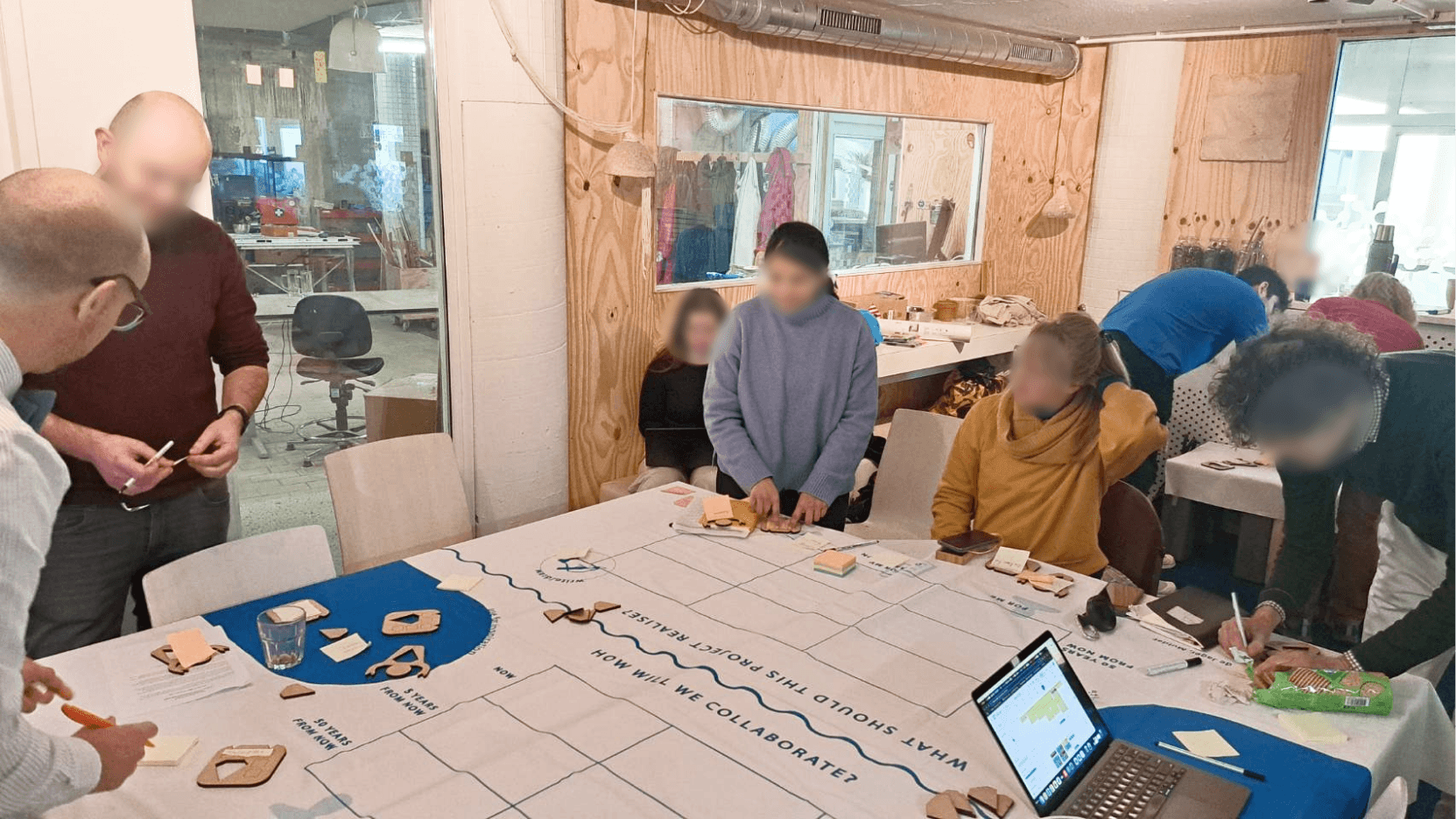

Scope - Data Analysis
Transition early findings to
design referenceDesign - Towards a Framework
Construct the liminality framework: Safe–Brave–Panic
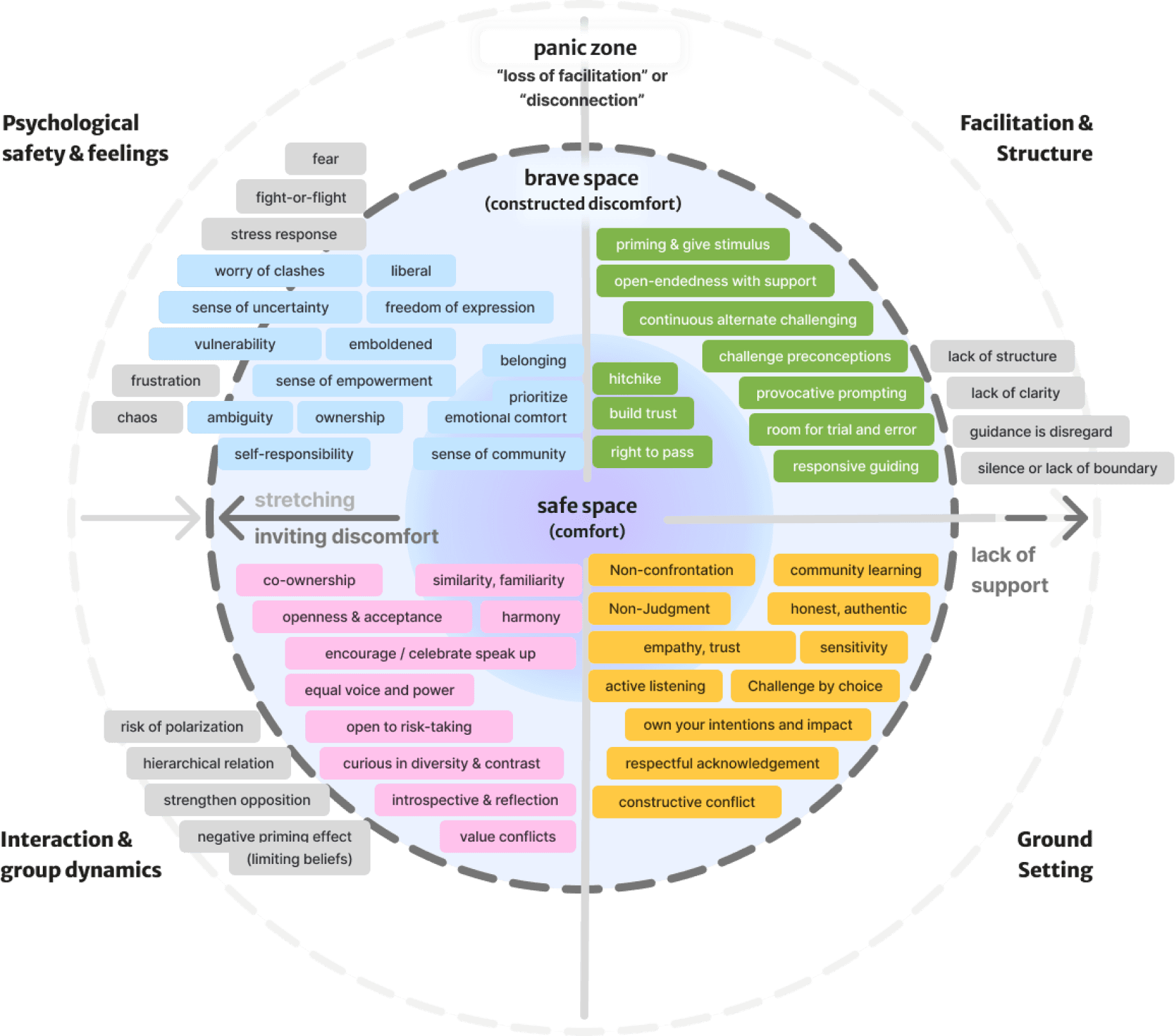
Action and Evaluate - Design Interventions
Prototype brave space through
micro-experiments
Action and Evaluate - Design Value Tokens
Design interactive tools to support value-centered discussion

Action and Evaluate - Context mapping tool
Evaluate the minimum delightful experience of participants

Action and Validate - Context adaptation
Partner with and design workshop for Climate Fresk

Action and Validate - Structured Interviews
Evaluate brave space with participants’ experience

Deliver - portable knowledge
A field guide to
embody Brave Space
What can you do with my project?
Facilitators can utilize the Safe–Brave–Panic framework as a design compass to diagnose group dynamics and guide interventions. Instead of aiming for immediate conflict resolution, use facilitation techniques to ensure a gradual progression in dialogue.
First, create a psychological safety environment, and then invite participants to engage in constructive discomfort by explicitly identifying value tensions and making space for differing views. Participants should be motivated to see value tensions not as problems to be avoided, but as a meaningful signal to be acknowledged and addressed. This approach ensures respectful recognition of diverse perspectives, which is essential for effective collective action.
Facilitators can utilize the Safe–Brave–Panic framework as a design compass to diagnose group dynamics and guide interventions. Instead of aiming for immediate conflict resolution, use facilitation techniques to ensure a gradual progression in dialogue.
First, create a psychological safety environment, and then invite participants to engage in constructive discomfort by explicitly identifying value tensions and making space for differing views. Participants should be motivated to see value tensions not as problems to be avoided, but as a meaningful signal to be acknowledged and addressed. This approach ensures respectful recognition of diverse perspectives, which is essential for effective collective action.
Embody Brave Space
Timeline | Feb 2025 – July 2025 Context | Master’s Thesis | TU Delft Strategic Product Design
Role | Lead Researcher & Strategic Facilitator
Recognition | Presented at Amsterdam UX Camp 2025 Expertise | Stakeholder Alignment, Psychological Safety, Organizational Strategy
for Value-Centered Discussion
Support multi-stakeholders in navigating value tensions through facilitation
for Value-Centered Discussion
Support multi-stakeholders in navigating value tensions through facilitation
Project Brief
Objective: Develop a design-oriented facilitation framework to help multi-stakeholder teams navigate deep-seated value tensions. Challenge: Traditional collaboration often fails when cultural, institutional, or ideological differences hinder meaningful dialogue and joint understanding. Action: Adopted a Research-through-Design (RtD) methodology, synthesizing field observations into iterative MVPs. Deployed the framework in Climate Fresk workshops to test contextual adaptability. Deliverables: A tangible Brave Space Field Guide for facilitators and a strategic module for value-centered organizational development.
Project Overview
In complex organizational transformations, value conflicts often remain hidden beneath "polite agreement," leading to stagnant decision-making and obstacles to change and innovation. This master’s thesis proposes the Brave Space framework—a design-led intervention that reframes discomfort and constructive conflict as catalysts for innovation. By shifting from mere "Safe Spaces" to actionable "Brave Spaces," the framework enables multi-disciplinary teams to surface latent tensions and align on core priorities. Validated through workshops with NGOs and TU Delft Dream Teams, this research provides a scalable lens for leaders to foster psychological safety and drive transformation in value-sensitive environments.
Behavioral patterns
Frequent status checks
Users check the status of their Hexabots an average of 7-10 times a day to ensure tasks are progressing as planned. Real-time, easy-to-read status updates are crucial.
Time-sensitive task assignments
About 65% of users assign new tasks to Hexabots in response to urgent needs, often with minimal time of planning. A fast task assignment process with proper guidance can significantly reduce user stress.
Complex operational settings
Users operate in challenging physical conditions, so the interface should be accessible even when users have limited dexterity or time, such as when wearing gloves or a fogged-up helmet.
Preferences
Frequent status checks
Many users expressed interest in hands-free control, particularly while wearing suits or performing manual tasks. Voice-activated task assignment and status checks can improve usability.
Personalization
Users would like to name and customize their Hexabots, making interactions more intuitive and personal. Providing options for customization could increase engagement and usability.
Clear task allocation
If multiple Hexabots are working in the same area or performing a similar task, it’s very important to be able to distinguish them easily. Clearly highlighting task locations and potential overlaps can prevent confusion, and make it easy to understand which Hexabot is currently performing a specific task.
User Profile
Explorers and researchers
These users focus on different mission-critical tasks, are often multitasking, and need to conduct their experiments efficiently.

Families
These users aren’t technical experts, rely on Hexabots for everyday activities, and require their interactions with the app to be as simple and straightforward as possible.


For the best wireframe display,
please rotate your screen horizontally to
continue reading. Thank you.
6
early exploration via experts
interviews with 6 practitioners
2+1
2 early MVP tests & 1 partnered workshop were performed
6
workshops implemented with
TU/D entrepreneur Dream Team

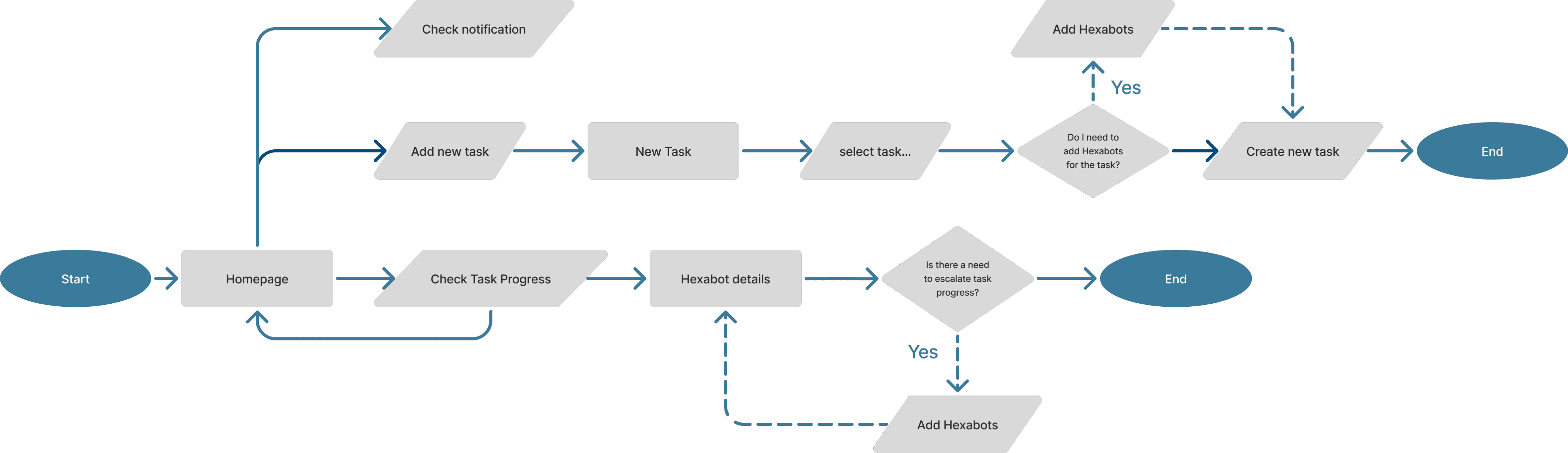
User Scenario: Resource Collection for a Turbine Prototype
On the Moon, advanced technology is essential. A research team in one of the lunar colony’s science domes is working on a prototype turbine using a silicon 3D printer. However, they lack the specific materials needed to complete the project. The user opens the app to manage the Hexabots and starts on the homepage, where they check the status of each Hexabot with all related info. Their goal is to quickly ensure that a Hexabot is tasked with gathering the necessary resources. Once this is accomplished, the user then monitors the Hexabot’s progress, receiving updates when it has collected the materials and returned to the dome after completing the task.
Key steps:
Open app → homepage shows Hexabot statuses
Assign Hexabot to gather resources
Track process → receive update when done
Materials returned → task complete
Task flow
PROBLEM SUMMARY
STRATEGIC DECISIONS
final deliverable: “A Field Guide to Embody Brave Space”
from field research to framework, target specific design focus
design micro-experiments (MVP) pilot design evaluation
problem framing - literature research
opportunity finding - field research
Scope
Action & Evaluate
Deliver
Delve
contextual adaptation
validation and evaluation
Action & Validate
Deliver
Research Approach
a spiral process combining Research through design (RtD) & action research
I employed a design-oriented, iterative methodology that combined Research through Design and Action Research. This involved observing multi-stakeholder Joint Value Creation workshops to frame the problem, developing a liminality-based Brave Space framework, and conducting three micro-experiments (Minimum Viable Prototypes) to test facilitation strategies for surfacing and constructively navigating tensions.
The intervention was later embedded and evaluated within a broader Climate Fresk workshop context to test its viability and transferability. Key collaborators included the JVC tool development team and the co-facilitator for the Climate Fresk workshop.
Fatigue, information overload, and a lack of real-time support have become silent threats to users' performance and well-being.
Most of them do not want to keep working there for a long time.
They drink a lot of coffee, energy drinks and experience sleeping problems due to irregular working hours.
They experience high peaks of stress and longer periods of boredom. There is not a good balance.
Some operators would like more personalized scenario planning and notifications on what to do.

Pieter
Former Head of Digital KLM
“Operators handling disruptions tend to face boredom when there are no disruptions.”
“We have an ongoing struggle of finding a balance between automated processes and human intervention.”
Isabel
Airside operation officer
at Schiphol
"The job is too demanding, therefore I will look for another position.”
"Coping with fatigue involves coffee, sleeping pills, and personal responsibility for fitness."
"Hollen of stilstaan." (It's all or nothing.)

Jaap
Health expert and general
practitioner
“Fatigue is not just a state of tiredness; it's a serious health concern with far-reaching consequences. Prolonged mental fatigue can impair cognitive function, decision-making, and overall well-being.”
“Long hours without breaks can disrupt circadian rhythms, impacting sleep-wake cycles and hormonal balance.”
A strategic move to penetrate a vertical industry, or else a risk of growth ceiling.
Despite growing competition, BARCO’s current offering lacks differentiation in the human experience layer—most features focus on technical visualization, not cognitive support.
The CTRL system was seen as flexible, but in practice lacks personalization, leading to operator frustration.
As smart airport infrastructure grows, BARCO risks falling behind more service-oriented competitors.
Remko
Control Room Operator in TU Delft
“They told us the system was flexible—but unless you change the entire software, it’s not.”
6
early exploration via experts
interviews with 6 practitioners
2+1
2 early MVP tests & 1 partnered workshop were performed
6
workshops implemented with
TU/D entrepreneur Dream Team
Project Brief
Objective: Develop a design-oriented facilitation framework to help multi-stakeholder teams navigate deep-seated value tensions. Challenge: Traditional collaboration often fails when cultural, institutional, or ideological differences hinder meaningful dialogue and joint understanding. Action: Adopted a Research-through-Design (RtD) methodology, synthesizing field observations into iterative MVPs. Deployed the framework in Climate Fresk workshops to test contextual adaptability. Deliverables: A tangible Brave Space Field Guide for facilitators and a strategic module for value-centered organizational development.
Project Overview
In complex organizational transformations, value conflicts often remain hidden beneath "polite agreement," leading to stagnant decision-making and obstacles to change and innovation. This master’s thesis proposes the Brave Space framework—a design-led intervention that reframes discomfort and constructive conflict as catalysts for innovation. By shifting from mere "Safe Spaces" to actionable "Brave Spaces," the framework enables multi-disciplinary teams to surface latent tensions and align on core priorities. Validated through workshops with NGOs and TU Delft Dream Teams, this research provides a scalable lens for leaders to foster psychological safety and drive transformation in value-sensitive environments.
Embody Brave Space
for Value-Centered Discussion
Support multi-stakeholders in navigating value tensions through facilitation
Timeline | Feb 2025 – July 2025 Context | Master’s Thesis | TU Delft Strategic Product Design
Role | Lead Researcher & Strategic Facilitator
Recognition | Presented at Amsterdam UX Camp 2025 Expertise | Stakeholder Alignment, Psychological Safety, Organizational Strategy
PROBLEM SUMMARY
STRATEGIC DECISIONS
User Profile
Behavioral patterns
Frequent status checks
Users check the status of their Hexabots an average of 7-10 times a day to ensure tasks are progressing as planned. Real-time, easy-to-read status updates are crucial.
Time-sensitive task assignments
About 65% of users assign new tasks to Hexabots in response to urgent needs, often with minimal time of planning. A fast task assignment process with proper guidance can significantly reduce user stress.
Complex operational settings
Users operate in challenging physical conditions, so the interface should be accessible even when users have limited dexterity or time, such as when wearing gloves or a fogged-up helmet.
Preferences
Frequent status checks
Many users expressed interest in hands-free control, particularly while wearing suits or performing manual tasks. Voice-activated task assignment and status checks can improve usability.
Personalization
Users would like to name and customize their Hexabots, making interactions more intuitive and personal. Providing options for customization could increase engagement and usability.
Clear task allocation
If multiple Hexabots are working in the same area or performing a similar task, it’s very important to be able to distinguish them easily. Clearly highlighting task locations and potential overlaps can prevent confusion, and make it easy to understand which Hexabot is currently performing a specific task.
Explorers and researchers
These users focus on different mission-critical tasks, are often multitasking, and need to conduct their experiments efficiently.
Families
These users aren’t technical experts, rely on Hexabots for everyday activities, and require their interactions with the app to be as simple and straightforward as possible.
STRATEGIC DECISIONS
STRATEGIC DECISIONS
STRATEGIC DECISIONS
Fatigue, information overload, and a lack of real-time support have become silent threats to users' performance and well-being.
Most of them do not want to keep working there for a long time.
They drink a lot of coffee, energy drinks and experience sleeping problems due to irregular working hours.
They experience high peaks of stress and longer periods of boredom. There is not a good balance.
Some operators would like more personalized scenario planning and notifications on what to do.
Isabel
Airside operation
officer at Schiphol
"The job is too demanding, therefore I will look for another position.”
"Coping with fatigue involves coffee, sleeping pills, and personal responsibility for fitness."
"Hollen of stilstaan." (It's all or nothing.)
Jaap
Health expert and
general practitioner
“Fatigue is not just a state of tiredness; it's a serious health concern with far-reaching consequences. Prolonged mental fatigue can impair cognitive function, decision-making, and overall well-being.”
“Long hours without breaks can disrupt circadian rhythms, impacting sleep-wake cycles and hormonal balance.”
Pieter
Former Head of
Digital KLM
“Operators handling disruptions tend to face boredom when there are no disruptions.”
“We have an ongoing struggle of finding a balance between automated processes and human intervention.”
A strategic move to penetrate a vertical industry, or else a risk of growth ceiling.
Despite growing competition, BARCO’s current offering lacks differentiation in the human experience layer—most features focus on technical visualization, not cognitive support.
The CTRL system was seen as flexible, but in practice lacks personalization, leading to operator frustration.
As smart airport infrastructure grows, BARCO risks falling behind more service-oriented competitors.
Remko
Control Room Operator in TU Delft
“They told us the system was flexible—but unless you change the entire software, it’s not.”
Fatigue, information overload, and a lack of real-time support have become silent threats to users' performance and well-being.
Most of them do not want to keep working there for a long time.
They drink a lot of coffee, energy drinks and experience sleeping problems due to irregular working hours.
They experience high peaks of stress and longer periods of boredom. There is not a good balance.
Some operators would like more personalized scenario planning and notifications on what to do.
Pieter
Former Head of Digital KLM
“Operators handling disruptions tend to face boredom when there are no disruptions.”
“We have an ongoing struggle of finding a balance between automated processes and human intervention.”
Isabel
Airside operation officer
at Schiphol
"The job is too demanding, therefore I will look for another position.”
"Coping with fatigue involves coffee, sleeping pills, and personal responsibility for fitness."
"Hollen of stilstaan." (It's all or nothing.)
Jaap
Health expert and general
practitioner
“Fatigue is not just a state of tiredness; it's a serious health concern with far-reaching consequences. Prolonged mental fatigue can impair cognitive function, decision-making, and overall well-being.”
“Long hours without breaks can disrupt circadian rhythms, impacting sleep-wake cycles and hormonal balance.”
A strategic move to penetrate a vertical industry, or else a risk of growth ceiling.
Despite growing competition, BARCO’s current offering lacks differentiation in the human experience aspect—most features focus on technical visualization, not cognitive support.
The CTRL system was seen as flexible, but in practice lacks personalization, leading to operator frustration.
As smart airport infrastructure grows, BARCO risks falling behind more service-oriented competitors.
Remko
Control Room Operator in TU Delft
“They told us the system was flexible—but unless you change the entire software, it’s not.”
STRATEGIC DECISIONS
Co designer Yi Hua Wang, Raphael Jung, Mas Apotheker, Eline Oei, Michiel Kokshoorn
Collaboration IBM
Contact me yihua.wang.173@gmail.com
Year 2023
STRATEGIC DECISIONS
Testing and Evaluation by the physical therapists in Taipei Veterans General Hospital Department of Rehabilitation and Technical Aid Center.
From discuss, testing, to evaluation, we adjust the elastic structure and strive for better stretching effect and user experience. Ensuring the ergonomic structure compliances safety and comfort.
Testing and Evaluation by the physical therapists in Taipei Veterans General Hospital Department of Rehabilitation and Technical Aid Center.
From discuss, testing, to evaluation, we adjust the elastic structure and strive for better stretching effect and user experience. Ensuring the ergonomic structure compliances safety and comfort.


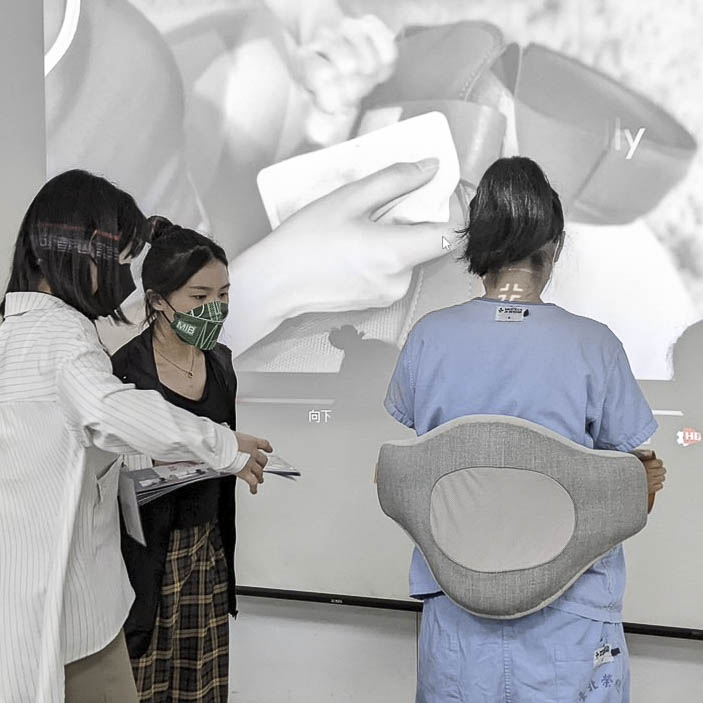


Testing and Evaluation by the physical therapists in
Taipei Veterans General Hospital Department of Rehabilitation and Technical Aid Center.
From discuss, testing, to evaluation, we adjust the elastic structure and strive for better stretching effect and user experience. Ensuring the ergonomic structure compliances safety and comfort.
Working Prototype Development
The 3D simulations were made for measurement and basic shape development. The lo-fi prototype for testing was made with PU and laser cut. Finally, thermoforming is chosen to shape the organic foam, and the working structures were produced with PP board, which stood the strength and flexibility testing. I enjoyed the iterative process to deal with conceptualization, but also to turn a concept into a tangible outcome and survive technical and professional validation.


Service Ecosystem & Interaction Design
Service System & Interaction Design
Strategic Design fills in the field of play. We leverage BARCO's technology strength while holding a holistic and human-centered point of view, providing a comprehensive overview of its evolution across three horizons.
Strategic Design fills in the field of play. We leverage BARCO's technology strength while holding a holistic and human-centered point of view, providing a comprehensive overview of its evolution across three horizons.
Service System & Interaction Design
Strategic Design fills in the field of play. We leverage BARCO's technology strength while holding a holistic and human-centered point of view, providing a comprehensive overview of its evolution across three horizons.
Service System & Interaction Design
Strategic Design fills in the field of play. We leverage BARCO's technology strength while holding a holistic and human-centered point of view, providing a comprehensive overview of its evolution across three horizons.
Working Prototype Development
The 3D simulations were made for measurement and basic shape development. The lo-fi prototype for testing was made with PU and laser cut. Finally, thermoforming is chosen to shape the organic foam, and the working structures were produced with PP board, which stood the strength and flexibility testing. I enjoyed the iterative process to deal with conceptualization, but also to turn a concept into a tangible outcome and survive technical and professional validation.
Working Prototype Development
The 3D simulations were made for measurement and basic shape development. The lo-fi prototype for testing was made with PU and laser cut. Finally, thermoforming is chosen to shape the organic foam, and the working structures were produced with PP board, which stood the strength and flexibility testing. I enjoyed the iterative process to deal with conceptualization, but also to turn a concept into a tangible outcome and survive technical and professional validation.
EXHIBITION AND AWARD
Pumping is currently under application of innovation patent, and being nominated in Taiwan International Student Design Competition finalist. I see Pumping as a first experiment into the world of health-care but looking forward to more future-oriented innovation where strategic and UX design can play for society and individual well-being.
2023 Young Designers' Exhibition (Left)
2023 Taiwan Tech Department of Design Graduation Show (Right)
2023 Taiwan International Student Design Competition | finalist
2023 Red Dot Award Design Concept | finalist
EXHIBITION AND AWARD
Pumping is currently under application of innovation patent, and being nominated in Taiwan International Student Design Competition finalist. I see Pumping as a first experiment into the world of health-care but looking forward to more future-oriented innovation where strategic and UX design can play for society and individual well-being.
2023 Young Designers' Exhibition (Left)
2023 Taiwan Tech Department of Design Graduation Show (Right)
2023 Taiwan International Student Design Competition | finalist
2023 Red Dot Award Design Concept | finalist
©Yihua Wang.
EXHIBITION AND AWARD
Pumping is granted design patent, and being nominated in Taiwan International Student Design Competition finalist. I see Pumping as a first experiment into the world of health-care but looking forward to more future-oriented innovation where strategic and UX design can play for society and individual well-being.
2023 Young Designers' Exhibition (Left)
2023 Taiwan Tech Department of Design Graduation Show (Right)
2023 Taiwan International Student Design Competition | finalist
2023 Red Dot Award Design Concept | finalist


Jaap
Health expert and general
practitioner
Expert Recognition
“Barco's system, with planned breaks, is a proactive measure to mitigate the detrimental effects of fatigue on the health of control room operators."
“Holographic visuals, changing in spatial context, may alleviate eye strain and offer visual comfort compared to prolonged use of static close-up screens."
Isabel
Airside operation officer
at Schiphol
Horizon 1 – Low perceived need for change
“Our interface is standard but works fine. People are used to it, and no one’s really asking for change.”
Horizon 2 – Curiosity, especially among younger staff
“Biometric tracking sounds useful—especially for night shifts. Younger colleagues would be more open to this than the ‘old guard.’”
Horizon 3 – High interest in futuristic well-being tools
“I’m excited about real-time fatigue and boredom tracking. I struggle with that, and this could actually help improve the way we work.”

Marinke
Management Trainee Schiphol
Positive Feedback on Operation
“Thinking about operations, these three phases show you're serious about making things efficient. Enabling operators to personalize their screens and incorporating predictive analytics would ultimately contribute to streamlining the operations process and enhancing disruption management.”
“In the first phase, using AI to analyze how operators work feels like a good move. It helps us suggest breaks based on their activity, which is a proactive way to support them.”
Marinke
Management Trainee Schiphol
Future Development Consideration
“Horizon 3, with its predictive analytics and immersive technologies, appears overly ambitious. The idea of anticipating operators' needs might lead to overdependence on technology, and integrating AR and VR could be more of a distraction than a benefit.”
Pieter
Former Head of Digital KLM
Horizon 1 – Personalization boundaries
“There’s a fine line between personal and professional on work devices. Most companies want a secure, focused environment.”
Horizon 3 – Immersive but disruptive potential
“This isn’t just tweaking tech—it’s a leap. You’re transforming the whole workspace.”
“The question is: how much change can people handle before it disrupts their routine?”
“Maybe we start with subtle energizers during downtime, not radical shifts during peak moments.”
Anass
Operator ASM bedrijfsvoering
Schiphol, Asset center
Personal Challenge
"I wear blue light glasses to work, since looking at the computer screens for a long time makes my eyes tired”
“We do not have the opportunity to personalize our computer screens.”
“Yes, sometimes I have difficulties concentrating. The asset centre is open 24/7, and every moment of every day we can get notifications through cellphone or selfmonitors."
Anass
Operator ASM bedrijfsvoering
Schiphol, Asset center
User Expert's Feedback
“I would appreciate a system that would track our heartrate or tiredness. I think that would really be needed, in my opinion.”
“What if the system suggests a break, because the operator is tired, at a time in which the operator cannot leave their station?”
“Voice and gesture commands in Horizon 2 seem like a lifesaver. It would be so much easier to navigate the system, especially during intense moments. It would need to function properly though. Otherwise it would be dangerous.”
EXHIBITION AND AWARD
Pumping is granted design patent, and being nominated in Taiwan International Student Design Competition finalist. I see Pumping as a first experiment into the world of health-care but looking forward to more future-oriented innovation where strategic and UX design can play for society and individual well-being.
2023 Young Designers' Exhibition (Left)
2023 Taiwan Tech Department of Design Graduation Show (Right)
2023 Taiwan International Student Design Competition | finalist
2023 Red Dot Award Design Concept | finalist
EXHIBITION AND AWARD
Pumping is granted patent, and being nominated in Taiwan International Student Design Competition finalist. I see Pumping as a first experiment into the world of health-care but looking forward to more future-oriented innovation where strategic and UX design can play for society and individual well-being.
2023 Young Designers' Exhibition (Left)
2023 Taiwan Tech Department of Design Graduation Show (Right)
2023 Taiwan International Student Design Competition | finalist
2023 Red Dot Award Design Concept | finalist

User Scenario: Resource Collection for a Turbine Prototype
On the Moon, advanced technology is essential. A research team in one of the lunar colony’s science domes is working on a prototype turbine using a silicon 3D printer. However, they lack the specific materials needed to complete the project. The user opens the app to manage the Hexabots and starts on the homepage, where they check the status of each Hexabot with all related info. Their goal is to quickly ensure that a Hexabot is tasked with gathering the necessary resources. Once this is accomplished, the user then monitors the Hexabot’s progress, receiving updates when it has collected the materials and returned to the dome after completing the task.
Key steps:
Open app → homepage shows Hexabot statuses
Assign Hexabot to gather resources
Track process → receive update when done
Materials returned → task complete
Task flow
Wireflow of main scenarios
Creating a new task called "Mining Silver” and checking updates on the homepage.
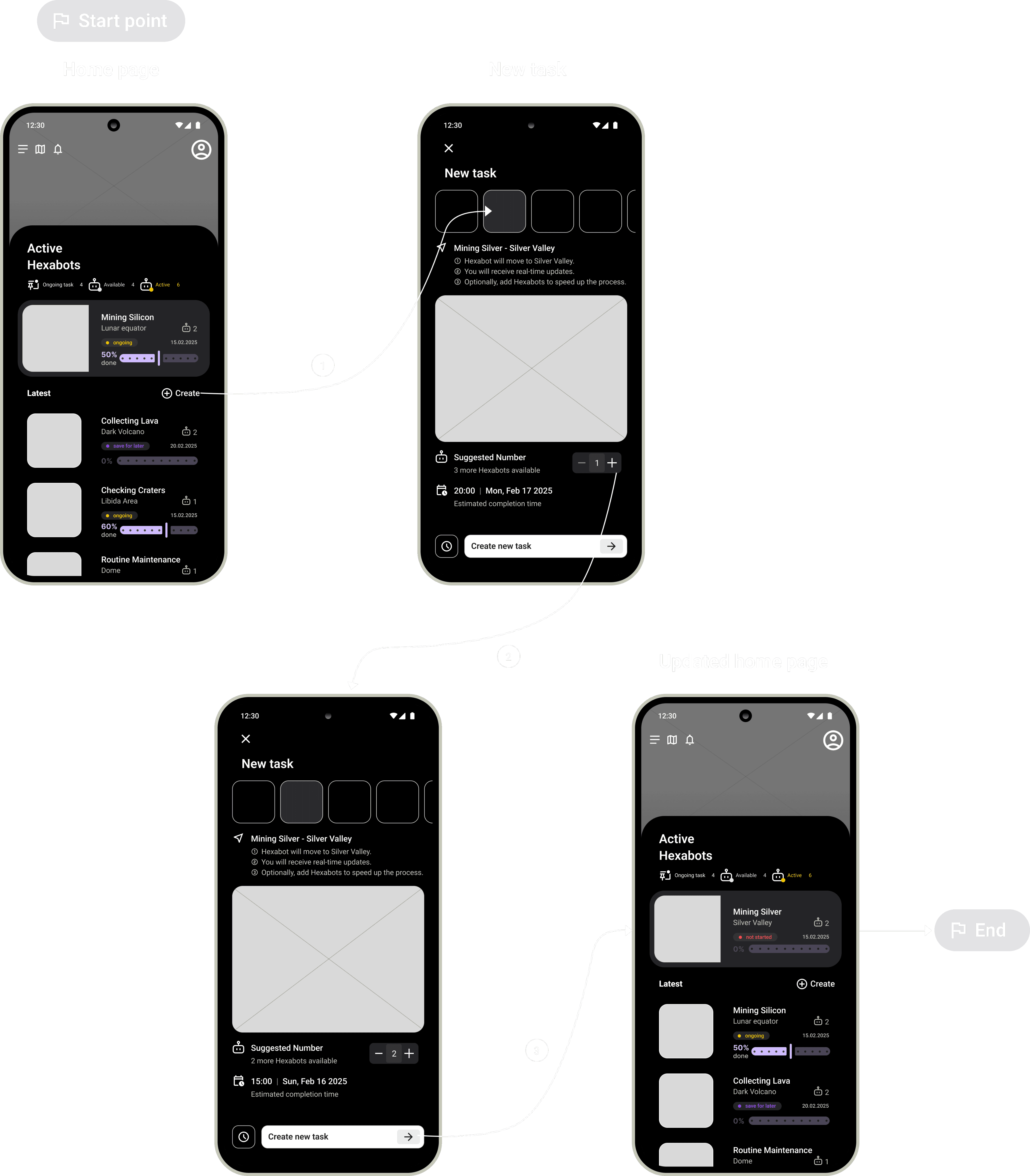
1
Create a new task without hassle and easy with few taps & clear instructions.
*Automatic suggestions with the embedded research data:
Hexabots can offer stable productivity and seamlessly respond to the advanced system, which makes the prediction of their performance viable. This helps reduce the stress of making quick decisions.
2
Users can determine whether to add more Hexabots to speed up the task progress.
3
Users will see the task update in home page.

Monitoring the task progress of “Mining Silicon” and add new Hexabots to accelerate the mining progress
Checking notification
Accessibility
Users can activate the voice assistant by calling “Hey Hexa” if they need hands-free control.
1
Checking the status of each Hexabot in the specific task.
2
According to the working progress of Hexabots, users can make interventions in the task.
Tracking the condition of Hexabot.
Add extra Hexabots to the task.
Calling back Hexabot if an emergency happens/runs out of energy/ needs Hexabots in response to urgent needs.
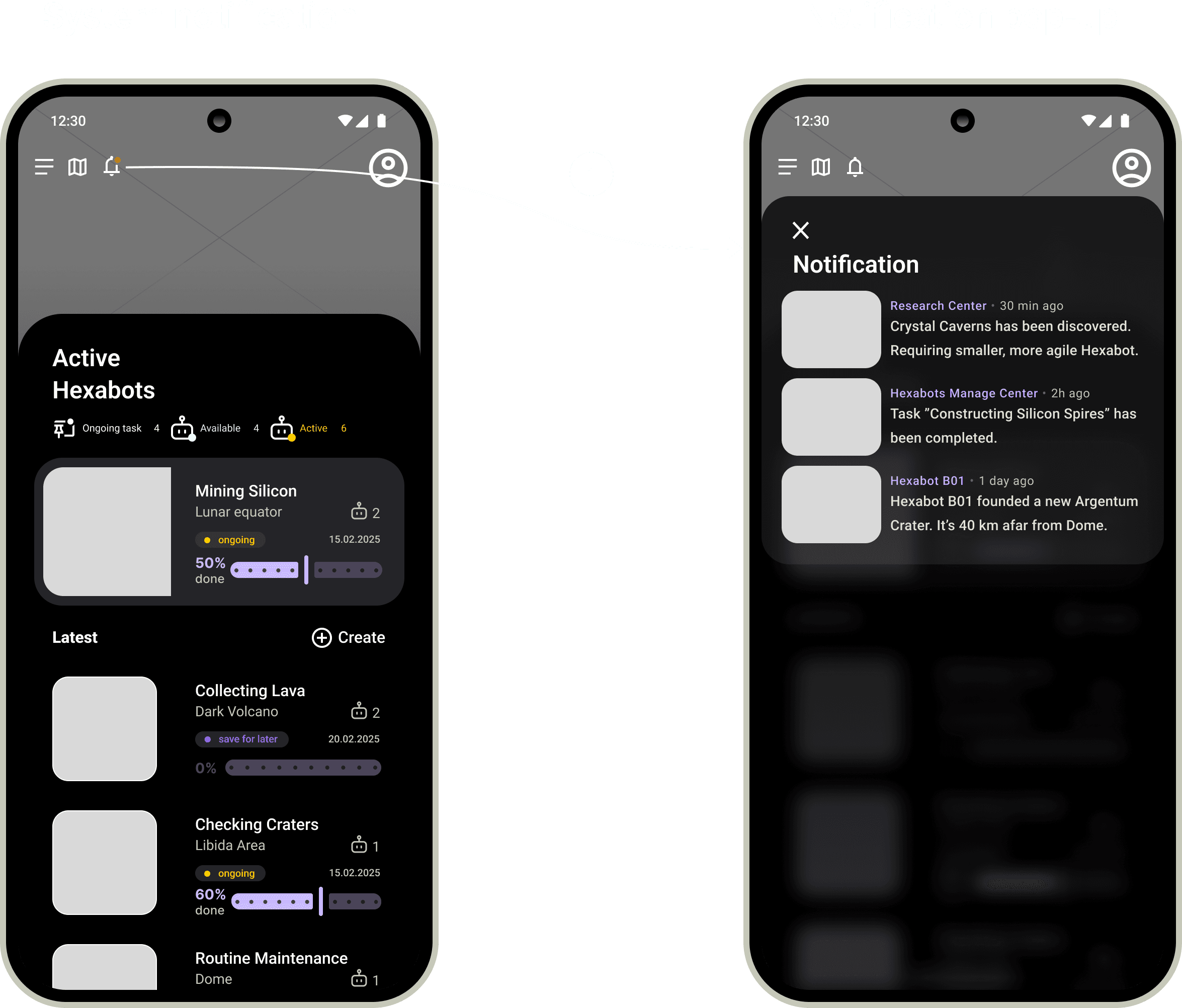
1
Getting the latest notification.
What can be included:
Message from active Hexabot
Update of task completion
Significant research progress
New tasks indicated by the research center to user


